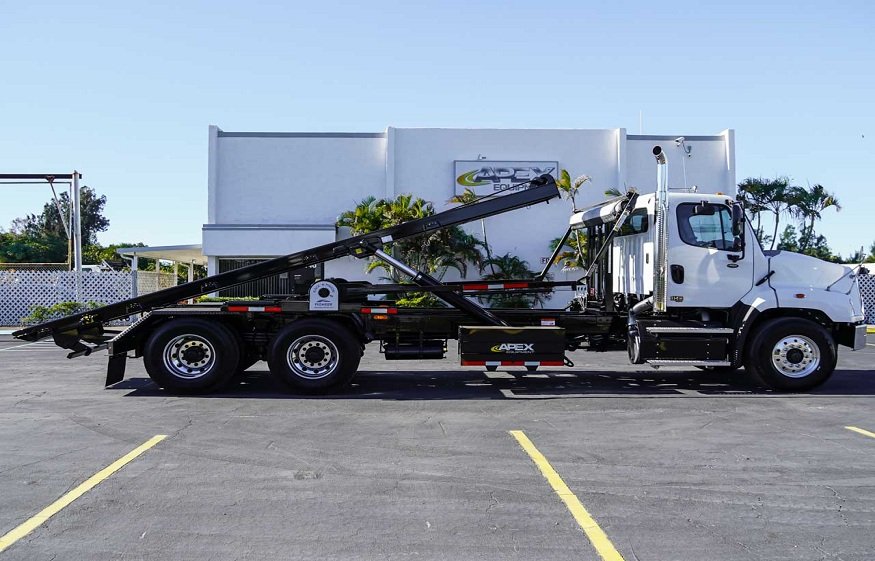
Finding the right roll-off truck requires careful research, especially for businesses that depend on dependable equipment every working day. Waste collection companies, construction contractors, demolition businesses, and recycling facilities need trucks that can handle their containers and operating conditions without creating unnecessary delays. A purchase should therefore involve more than comparing prices or choosing the first available vehicle.
Galfab roll-off systems are designed for cable-style container handling and heavy-duty waste transportation applications. Buyers considering a new or available truck should review its specifications, condition, configuration, service history, and long-term operating costs. The following tips can help businesses make a more informed purchasing decision.
Define Your Business Requirements First
Before searching for a truck, identify the type of work it will perform. A company collecting construction debris may need a different setup from a business providing regular commercial container rentals. The materials being transported, the size of the containers, and the expected frequency of use all influence the right configuration.
Consider the heaviest loads the truck will regularly handle. Also review the length and dimensions of the containers, the number of daily pickups, and the types of roads and job sites involved.
A clear understanding of these requirements will help narrow the search and prevent businesses from purchasing a truck that is either unsuitable or unnecessarily expensive for their needs.
Check the Hoist Capacity
Hoist capacity is one of the most important specifications to verify. Galfab’s Outside Rail series is listed by Atlantic Heavy Duty with capacities of 60,000 pounds and 75,000 pounds.
However, buyers should not confuse hoist capacity with the legal payload capacity of the complete truck. The chassis, axle ratings, container weight, load distribution, and local transportation regulations all affect the maximum load that can be carried safely and legally.
Ask the dealer to explain how the selected hoist and chassis work together. The configuration should be appropriate for the actual containers and materials used by the business.
Review the Hoist and Roller Condition
For a used truck, inspect the roll-off system carefully. The hoist frame, rails, rollers, cables, winch components, and container support areas should be checked for excessive wear, damage, corrosion, or signs of poor repairs.
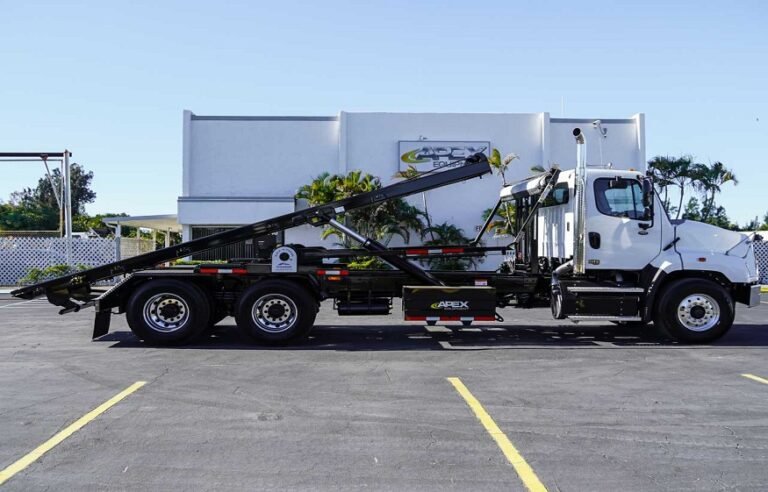
Galfab’s Outside Rail design uses rollers to help container long sills move across the hoist frame. Its listed features include outboard-supported side rollers and greaseable roller shafts. These components should be inspected to confirm that they are in suitable working condition.
A professional inspection can help identify problems that may not be obvious during a short visual review. Buyers should request maintenance records and ask whether any major components have recently been replaced.
Examine the Hydraulic System
Hydraulic components are essential to the operation of a roll-off truck. A buyer should check for fluid leaks, damaged hoses, worn fittings, unusual noises, and inconsistent movement during operation.
Ask whether the hydraulic system has been serviced according to the manufacturer’s recommendations. The oil reservoir, filtration system, cylinders, valves, and controls should all be reviewed by a qualified technician.
If possible, observe the truck operating under appropriate conditions. The hoist should function consistently without unusual movement or warning signs. Any concerns should be investigated before a purchase agreement is completed.
Inspect the Chassis and Overall Vehicle
The hoist is only one part of a roll-off truck. The chassis must also be in good condition and appropriate for the intended workload.
Review the engine, transmission, brakes, suspension, steering, tires, frame, electrical system, and other important components. Check the vehicle’s maintenance history and look for signs of accidents, structural damage, corrosion, or extensive wear.
Buyers should also confirm the chassis ratings and compatibility with the installed hoist. A truck that appears suitable based on its hoist specifications may still be inappropriate if the chassis cannot support the intended application.
Compare Available Equipment and Options
Different trucks may include different equipment packages. Galfab lists options for its Outside Rail systems such as tarping systems, toolboxes, auxiliary stops, fenders, pintle hooks, onboard scale systems, and work lights.
Consider which features are important for the business. A company operating in low-light conditions may benefit from additional lighting. A business transporting materials that require covering may need a compatible tarp system. Other operators may prioritize camera systems or onboard weighing equipment.
The goal should be to choose a practical configuration that supports daily work without adding unnecessary cost.
Ask About Service History and Documentation
A quality truck should come with clear information about its condition and maintenance history. Buyers should ask for available service records, inspection reports, ownership details, and documentation relating to the hoist and chassis.
For used equipment, find out how frequently the truck was operated and what type of work it performed. A vehicle previously used in demanding environments may have different wear patterns from one used for lighter commercial applications.
Also ask about warranty coverage, available replacement parts, and any repairs that may be needed soon after purchase. These details can help buyers estimate the real cost of ownership.
Work With a Reliable Equipment Dealer
A knowledgeable dealer can help buyers compare configurations, understand specifications, and identify suitable equipment. Dealer support is particularly useful when a business needs a truck built or configured for a specific container system.
Atlantic Heavy Duty works with Galfab and supports customers with roll-off truck sales, parts, and service. Buyers can discuss their operating needs, ask about available inventory, and explore configuration options with the company’s team.
Before purchasing, confirm the truck’s specifications, current availability, delivery arrangements, warranty details, and service options. Buyers should also ask whether the equipment can be inspected and tested before the transaction is completed.
Consider the Total Cost of Ownership
The purchase price is only one part of the financial decision. Businesses should also consider fuel, insurance, maintenance, repairs, tires, replacement parts, registration, and potential downtime.
A lower-priced truck may require significant repairs, while a more expensive vehicle may provide a configuration that better matches the company’s workload. Comparing the expected costs over the planned ownership period can provide a clearer picture of value.
Financing may also be worth discussing if it helps the business preserve working capital. Review payment terms carefully and compare them with expected revenue from the truck’s operation.
Make the Final Decision Carefully
Finding quality Galfab trucks for sale begins with understanding the business’s actual requirements. Buyers should verify hoist capacity, inspect the rollers and hydraulic system, review chassis condition, check documentation, and consider available service support.
A careful evaluation can reduce the risk of unexpected expenses and help ensure that the selected vehicle is appropriate for the work ahead. By researching available options and consulting a knowledgeable provider such as Atlantic Heavy Duty, businesses can take a more confident approach to purchasing roll-off equipment.
About the Author